How does DNA damage alter neuronal genomes?
We map DNA damage and repair errors in individual brain cells to understand how genome integrity changes in Alzheimer's disease.
Read more
Dileep LaboratoryBaylor College of Medicine

Brain aging & neurodegeneration

DNA damage

3D genome
DNA damage is an early hallmark of aging and neurodegeneration. We map where breaks accumulate in long-lived brain cells and how faulty repair rewrites the genome.
The genome folds in three dimensions to control which genes neurons and glia can use. We ask how that architecture is remodelled by learning, aging and disease.
Neurons can live as long as we do. We study how genomic and epigenomic integrity erodes over a lifetime and how that drives age-related neurological disease.
Every brain cell carries its own mosaic of changes. Single-cell genomic methods let us resolve them cell type by cell type.
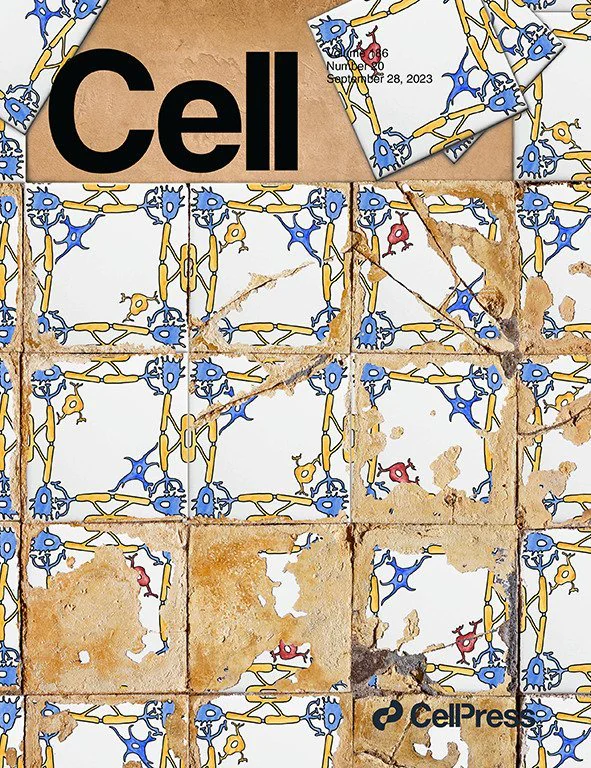
Featured publication · Cell 2023
Neuronal DNA double-strand breaks lead to genome structural variations and 3D genome disruption in neurodegeneration.
Current projects
We map DNA damage and repair errors in individual brain cells to understand how genome integrity changes in Alzheimer's disease.
Read moreWe investigate how the genome's three-dimensional organization changes with learning, aging, and disease in neurons and glia.
Read moreWe study how chemotherapy and radiation affect the genome and epigenome of long-lived brain cells, and how these changes may contribute to chemobrain.
Read moreMeet the people behind the science

Assistant Professor
Postdoctoral Scholar
Research Technician/Lab Manager

Research Technician/Bioinformatics

Undergraduate Researcher

Student Researcher
Join us